Missing Middle Housing in Toronto: From Policy Intent to Real-World Outcomes
Missing middle housing is meant to unlock affordability in Toronto, but the results are far from equal.
Toronto is facing a housing crunch that has become impossible to ignore. Rents continue to climb faster than incomes, affordable housing waitlists keep growing, and many residents are being priced out of neighbourhoods they have lived in for years.
In response, the City has been promoting what is often called missing middle housing. This category includes multiplexes and secondary units such as laneway and backyard suites. These housing types are meant to sit between high-rise condos and single-family homes, increasing density without fundamentally changing the look or character of established neighbourhoods.
On paper, the idea is compelling, and in many respects it makes sense. In practice, however, the results have been uneven across the city. Although these housing types are now permitted in most neighbourhoods, they are not being built evenly, and that uneven pattern is shaping who gets access to housing in different parts of Toronto.
What Is “Missing Middle” Housing?
For decades, Toronto’s growth has followed a familiar pattern often described as ‘tall and sprawl’. Downtown and a few other growth centres absorb most new development through condo towers, while large areas of the city remain dominated by detached homes.
Missing middle housing is meant to fill the gap between those two extremes. It focuses on modest, low-rise additions such as converting a single house into a triplex or adding a laneway suite in neighbourhoods that historically allowed only one dwelling per lot.
Through the Expanding Housing Options in Neighbourhoods initiative, the City updated zoning rules to permit these housing types across Toronto. In theory, that change should have opened the door to gradual, city-wide intensification. In reality, the outcomes have been far more uneven.
The Geography of Middle Housing
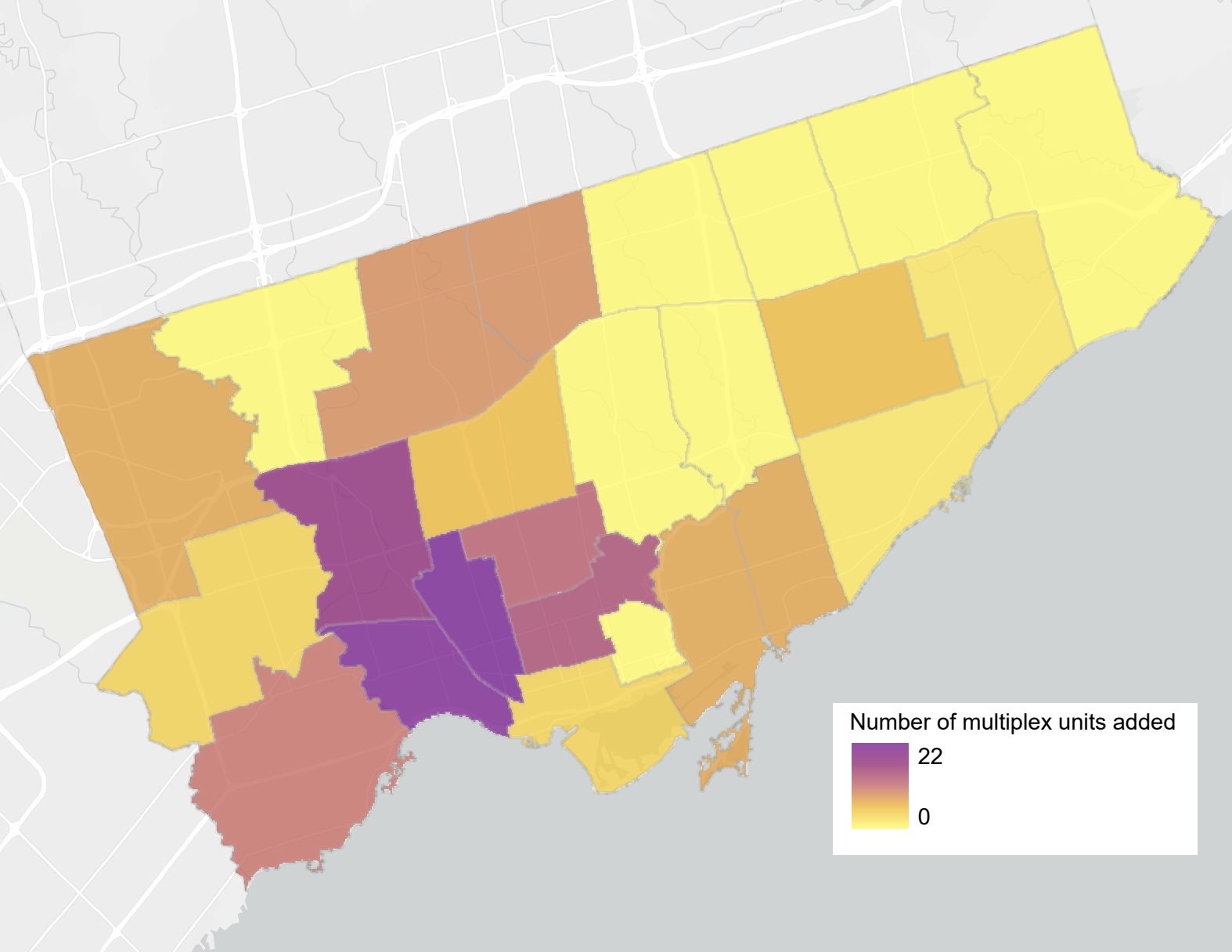
Completed Multiplex Units, 2024. Source: Toronto Open Data Portal
Recent building permit data shows that missing middle housing is being built, but activity is concentrated in a limited number of areas. A small set of neighbourhoods, mostly in the West End and closer to Downtown, are responsible for a large share of new multiplexes and laneway suites.
At the same time, many parts of the city, including portions of North York and Scarborough, have seen little to no activity. Even more striking is the lack of development in some of Toronto’s wealthiest, lowest-density neighbourhoods. These areas often have larger lots and more physical capacity to add housing, yet they are contributing the least.
The result is a pattern where neighbourhoods that have already been absorbing growth continue to do so, while areas with the greatest potential to add housing remain largely unchanged. That imbalance is not just a technical planning issue; it has tangible consequences for access and opportunity.
Why Isn’t Middle Housing Being Built Everywhere?
If zoning now allows missing middle housing across the city, it is reasonable to ask what is holding it back. The answer is that zoning reform addressed only one part of a much larger system.
1. Rules Still Make Building Difficult
Even though multiplexes are technically allowed, other regulations such as height limits, setbacks, and lot size requirements can make projects difficult or expensive to build.
In some areas, these rules effectively cancel out the zoning changes.
2. The Economics Do Not Always Work
Building small-scale housing is not always profitable, especially in high-cost neighbourhoods.
Land prices are higher in wealthier areas, and construction costs do not change much from one neighbourhood to another. That makes it harder for builders to make the numbers work, particularly for smaller projects.
3. Community Resistance Plays a Role
In some neighbourhoods, local opposition to change can slow or discourage development.
Even modest projects can face pushback, adding time, uncertainty, and cost. All of this makes builders less likely to take them on.
Who Benefits, and Who Does Not
The data shows that new housing is not appearing randomly across the city. Instead, it follows patterns tied to land values, income levels, and local conditions.
Lower- and middle-income neighbourhoods, many of them closer to Downtown, are seeing more missing middle development. Higher-income areas, particularly in North Toronto, are seeing far less. This matters because those higher-income neighbourhoods often offer better access to parks, higher-ranked schools, and more stable long-term investment.
When those areas do not add housing, the benefits they provide remain out of reach for many residents. In that sense, the uneven rollout of missing middle housing becomes an equity issue as much as a planning one.
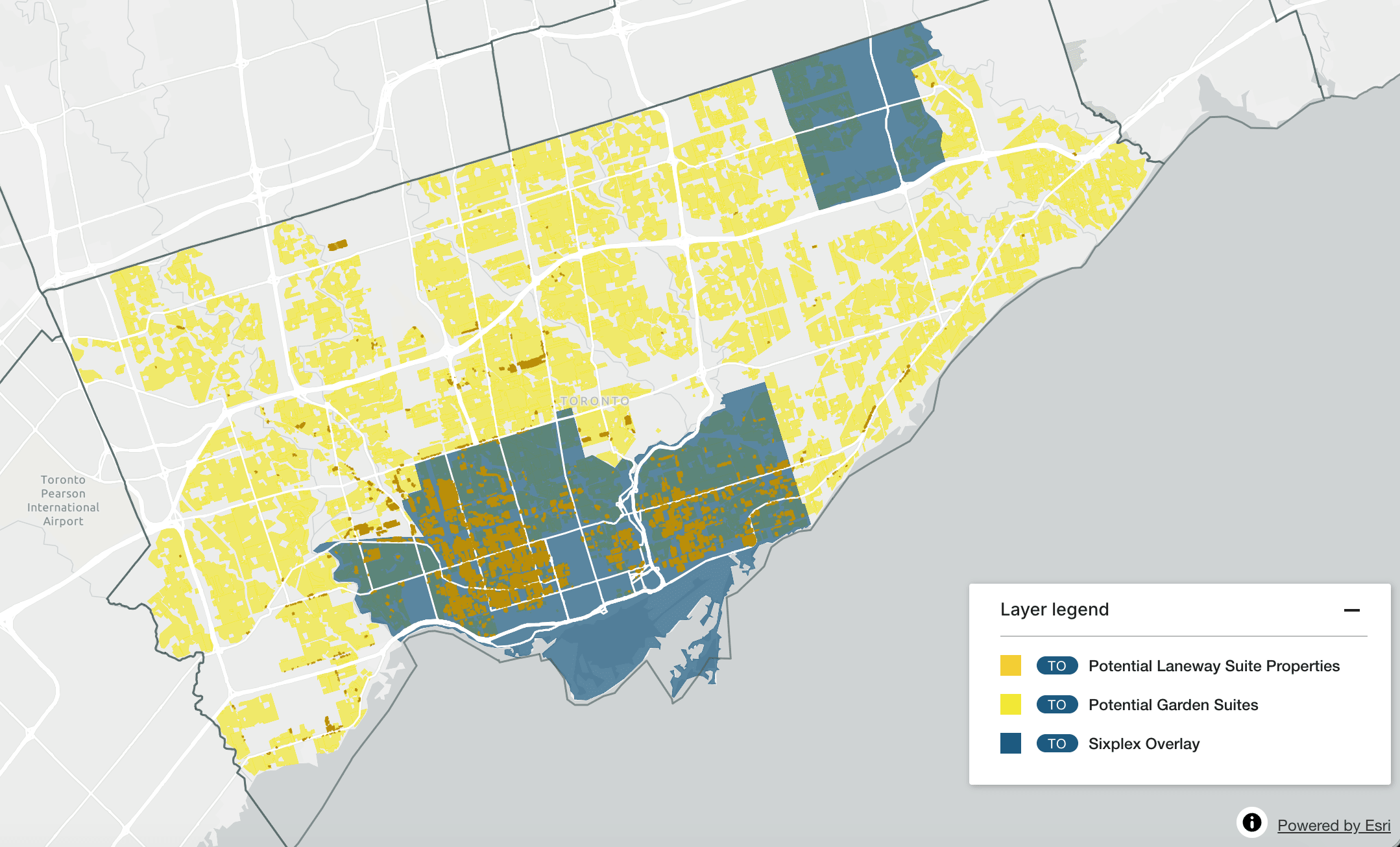
Potential Middle Housing Sites, Source: Ratio.City
Is the Policy Working?
The policy is moving in the right direction, but it is not yet delivering at the scale required. Since the zoning changes were introduced, the number of multiplex permits has increased, which suggests the reforms are having an effect.
At the same time, overall production remains far below what the city needs. At current rates, Toronto is unlikely to meet its housing targets, and without more balanced growth across neighbourhoods, the benefits of new housing will continue to be unevenly distributed.
What Needs to Change?
If Toronto wants missing middle housing to truly deliver, it needs to go beyond zoning.
Here are three practical shifts that could make a real difference:
1. Set Clear Expectations for Every Neighbourhood
Right now, city-wide numbers hide the fact that some areas are contributing far less than others.
Setting neighbourhood-level targets would make expectations clearer, especially in higher-income areas that have been slow to build.
2. Make It Easier to Build
The city has already experimented with pre-approved designs for laneway suites. Expanding this idea to more housing types like duplexes and fourplexes could reduce costs and speed up approvals.
Simpler processes mean more homeowners and small builders can take on these projects.
3. Track Who the Housing Is For
Building more homes is important, but it is not the whole story.
Right now, there is limited data on who is living in these new units and what they can afford. Without that, it is hard to know whether missing middle housing is improving affordability or just adding more supply at the top end of the market.
If the goal is to expand access, the city needs to measure outcomes, not just permits.
The Bottom Line
Toronto has taken an important step by allowing more housing types in its neighbourhoods, and these changes are already beginning to have an impact. However, the data shows that policy alone is not enough.
Where housing gets built continues to be shaped by economics, regulations, and local dynamics. Those forces are currently producing an uneven result, with some neighbourhoods adapting and others remaining largely unchanged.
If the City wants housing to be more accessible across Toronto, it needs to close that gap. The question is not only how much housing gets built, but also where it is built and who it is meant to serve.