GIS leaders in conversation: Esri Canada’s 2025 Leadership Forums
In 2025, Esri Canada’s Strategic Advisory division hosted three full-day sessions for GIS leaders in Calgary, Toronto and Montréal. The 2025 GIS Leadership Forums brought leaders together to discuss common interests, concerns and opportunities; what it means to run a high-performing GIS program; and the future of GIS and the profession in a strategic context. In this blog post, Esri Canada manager of management consulting Allen Williams reports back on his experiences at all three events, including the major themes that emerged across 2025.
This year’s GIS Leadership Forums brought together hundreds of geospatial leaders and executives in Calgary, Toronto and Montréal for a series of engaging, full-day sessions focused on leadership, innovation and the impact of GIS. They were focused squarely on the needs and interests of leadership and focused on what it takes to run and scale a high-performance GIS program.
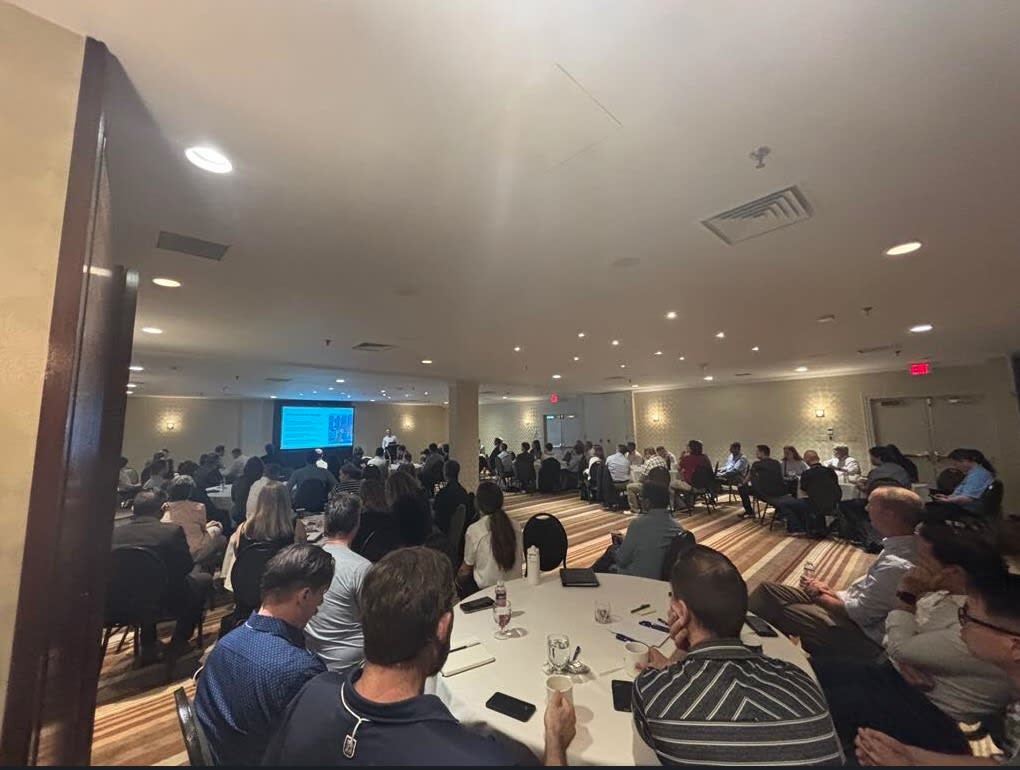
The Toronto GIS Leadership Forum
At the three sessions, Esri Canada’s Strategic Advisory team had the opportunity to present, facilitate discussions and listen to customers from municipalities, utilities and private organizations about how they are advancing their GIS programs to deliver organizational value.
Participants were encouraged to introduce themselves to new faces and actively engage in roundtable discussions throughout the day. This created a dynamic mix at each table where a GIS leader from a large construction firm managing a team of over 20 specialists might sit alongside a GIS manager from a small municipality with just a few staff and representatives from First Nations communities.
Despite the differences in organizational size and scope, the GIS leaders around each table discovered they shared many common challenges, insights and opportunities.
A few key themes and reflections stood out from this year’s conversations.
1. Elevating the conversation around GIS
One important takeaway from this year’s forums was the need to continue elevating the conversation around GIS within organizations. While many foundational topics (such as governance, data management and strategic planning) remain essential, the pace of technological change and the growing expectations of geospatial professionals are reshaping the landscape.
Today, GIS leaders are expected not only to master technology but to understand the broader business context in which it operates, as well as the value it brings to different stakeholders within an organization. GIS leaders must now serve as advocates and knowledge translators, able to speak the language of both executives and end users. There was a clear sense that to gain organizational support for investment in GIS, it’s essential to connect the technology’s unique capabilities to enterprise goals, communicate its value across departments and actively contribute to broader transformation discussions. This positions GIS as a strategic business capability rather than a technical function.
2. Leveraging the power of a geographic approach
A clear theme across all three forums was the continued need to look beyond GIS maps and applications and to focus on the many ways a geographic approach can help address organizational challenges, solve problems, improve decision-making and enable business transformation.
Participants stressed the importance of continuously reframing the role of GIS, shifting the conversation from products and services to the strategic outcomes GIS makes possible. This includes drawing direct connections between the geospatial strategy and the organization’s broader business, operational and IT strategies. When those linkages are clear, GIS remains visible, relevant and strongly aligned to enterprise priorities.
Sessions such as “Essential Skills for a GIS Manager”, “Approaches to Drive GIS Innovation”, “GIS Workforce Models”, and “Recommendations for Scaling Your GIS Program” reflected this shift. The discussions underscored the growing expectation for GIS professionals to communicate business impact in measurable terms and to articulate how GIS supports efficiency, service improvement and informed decision-making across the organization.
Leaders also highlighted the need for more focused adoption strategies to ensure GIS is recognized not only as a provider of information products, but as a trusted advisor in location intelligence and a partner in better organizational performance.
This aligns with a broader trend: successful GIS programs are increasingly those that embed themselves within business processes, contribute to enterprise transformation and champion the geographic approach as a powerful lens for driving better outcomes.
3. Change management as a critical enabler
“Where does change management fit in our geospatial strategy?” asked a municipal representative at the Montréal GIS Leadership Forum.
Change management is an important but often underestimated element of GIS program success. At the GIS Leadership Forums, leaders shared experiences about navigating organizational change, building internal champions and embedding GIS within business processes.
Change management is a critical enabler of any GIS strategy, as the strategy itself represents a journey from the current state toward a future vision of how geospatial capabilities will support the organization. Achieving that vision requires change across multiple dimensions of technology, tools, processes, governance and people. Effective change management helps organizations navigate this transformation by managing the pace of change, preparing users for new tools and workflows, and addressing areas of resistance. Embedding structured change management practices within the GIS program ensures that investments in technology and people align, ultimately driving adoption, building confidence and realizing the full business value of the GIS strategy.
One of the takeaways from the forums was that technology alone is not enough; successful GIS programs depend on sustained leadership and on properly managing the pace of change to ensure the broad adoption of GIS solutions and services.
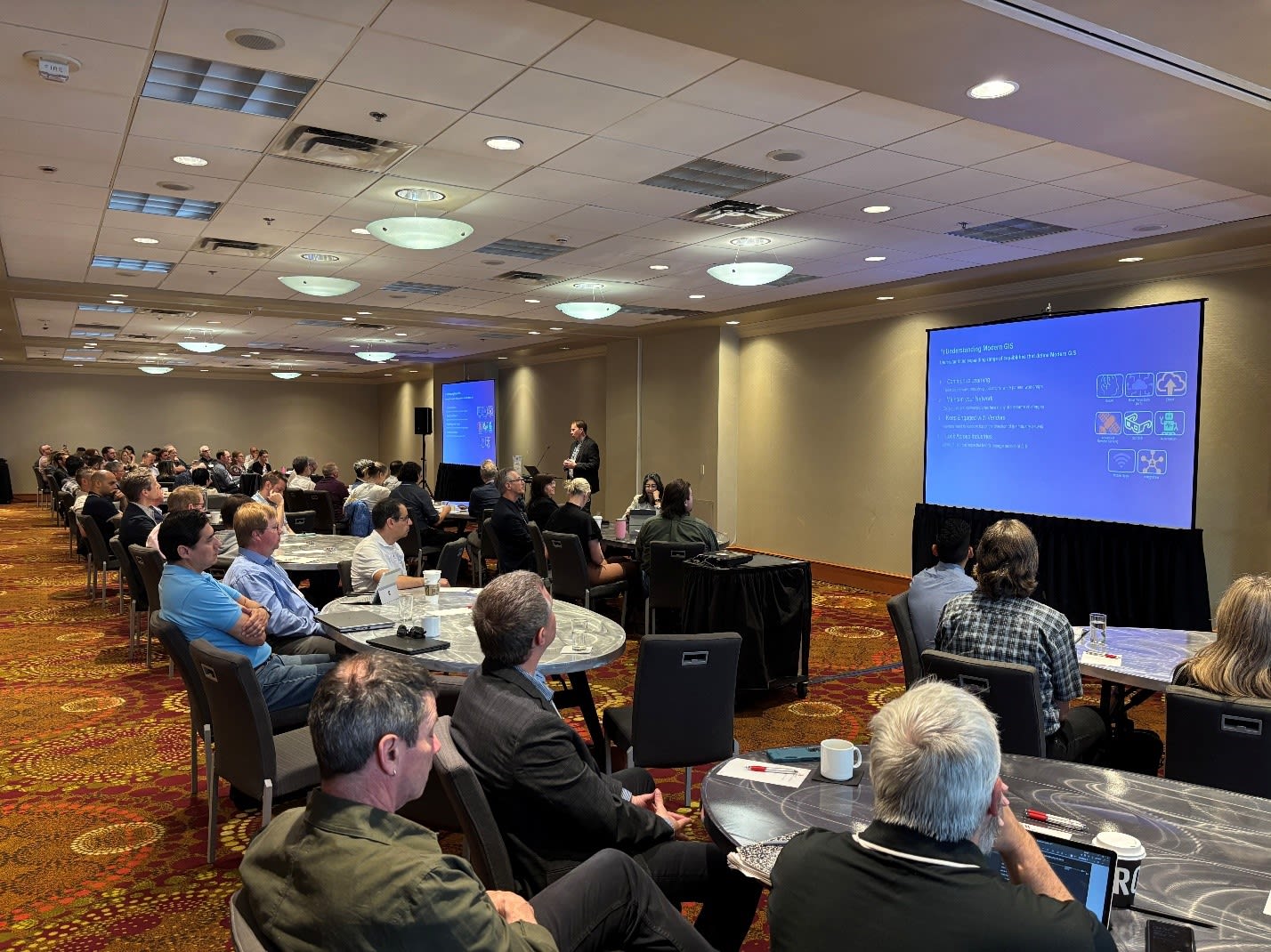
The Calgary GIS Leadership Forum
4. Measuring progress, demonstrating value & return on investment (ROI)
Organizations across Canada are increasingly focused on ROI and benefits realization. Many are moving beyond anecdotal success stories toward frameworks that quantify the value GIS delivers. Several attendees expressed interest in practical templates and metrics to help measure progress against their geospatial strategies, an area we plan to explore further in next year’s sessions.
5. The emerging role of AI in GIS
Artificial intelligence (AI) generated strong interest across all three forums, sparking conversations about how it can enhance data analysis, automate workflows and improve predictive insights. While adoption levels vary, there was apparent enthusiasm for understanding how AI can extend the reach and impact of GIS programs, particularly when supported by strong governance and data management practices.
One of the strongest themes to emerge from this year’s leadership forums was the evolving role of AI in GIS. Across the country, leaders expressed excitement and a sense of urgency as AI begins to redefine what “better” means in geospatial programs. New AI-driven capabilities are reshaping both the user experience and the technology foundation, offering tools and workflows that simply didn’t exist a year or two ago. This rapid shift is putting pressure on leaders to craft strategies that address not only the technical implications of AI but also the human ones, such as skills, roles, processes and expectations.
The promise of AI is powerful: assistants and natural language interfaces now allow anyone, regardless of technical background, to ask spatial questions, explore data and participate meaningfully in problem-solving. While every organization sits at a different point on the journey with varying ambitions, capabilities and pressures, the sentiment from the leadership forums was clear. The key is to pick a starting point that aligns with your goals and readiness, begin building from there and let momentum carry the transformation forward.
“AI is at our doorstep, and we need to prepare our workforce and governance practices to evolve alongside it,” shared a participant from a construction company during the Montréal GIS Leadership Forum.
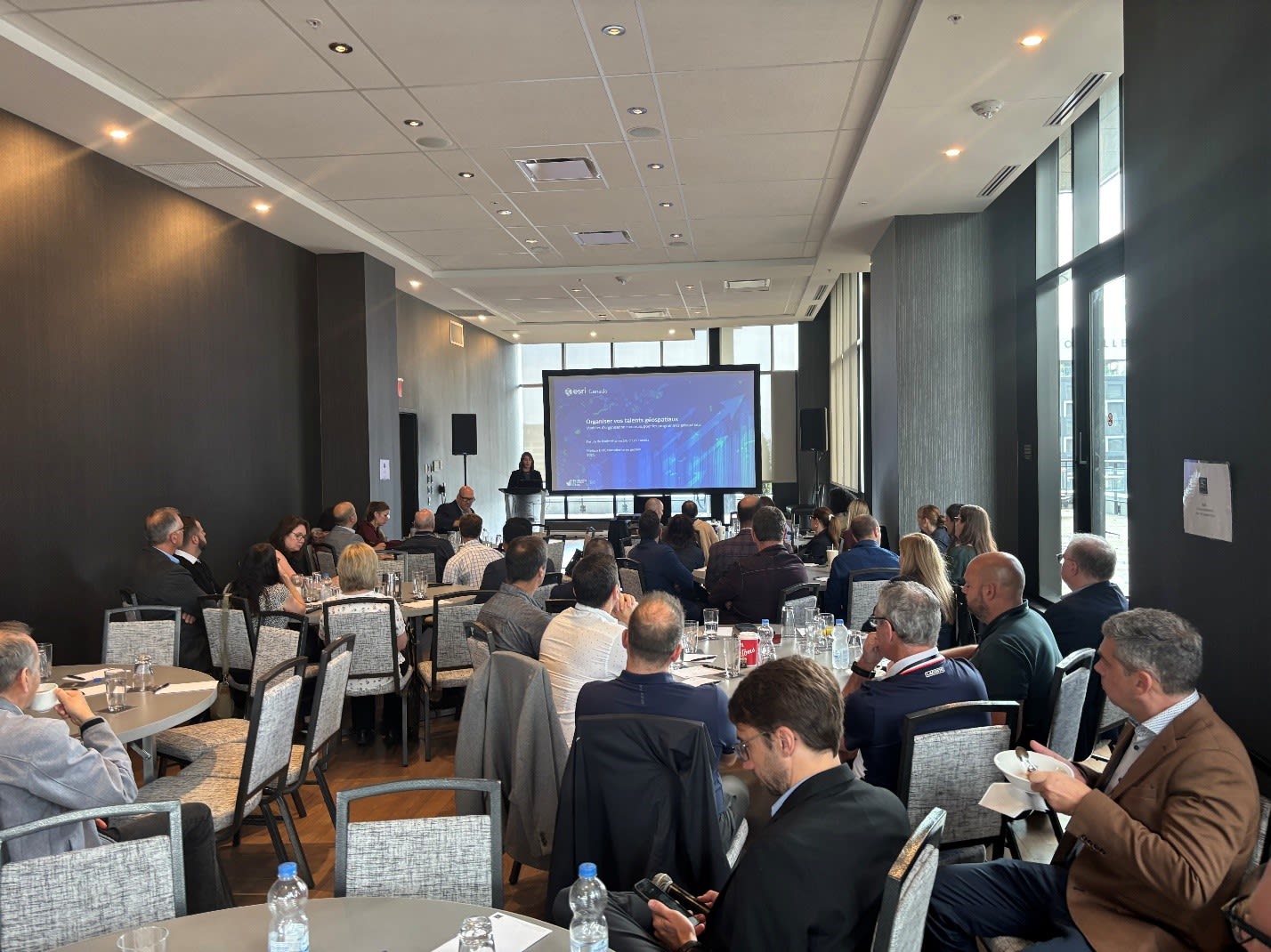
The Montréal GIS Leadership Forum
6. Learning from real-world GIS transformations
Each GIS Leadership Forum featured a customer presentation and a discussion showcasing how organizations have transformed their GIS programs from good to great. These stories offered practical insights into the challenges and successes that accompany technology modernization efforts, reinforcing the importance of leadership, persistence and strategic alignment.
“Hearing from the City of Barrie GIS manager about how their GIS program has evolved over the past 10 years was highly impactful. It made me think of some strategies and approaches that we may be able to adopt for our city,” shared a participant at the Toronto GIS Leadership Forum.
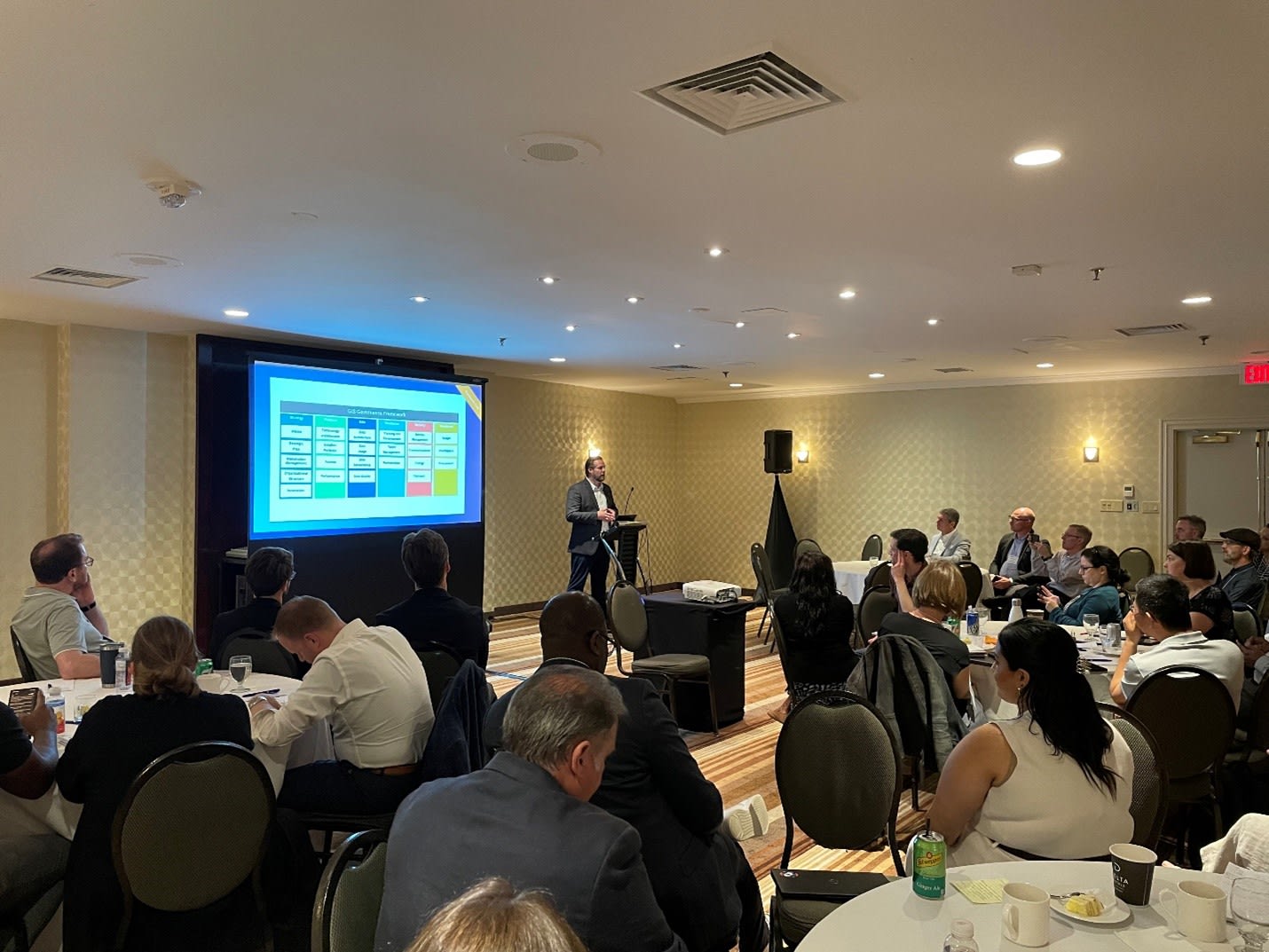
The Toronto GIS Leadership Forum
7. Building community and connection
As I participated in all the GIS Leadership Forums, one thing became obvious: the GIS community across Canada is well-connected, engaged and, in many respects, thriving. Across all three events, it was inspiring to see professionals share their experiences, lessons and successes so openly. The networking sessions, where the most candid and insightful conversations happened, reminded us of the strength of this community and the passion that drives it. It’s evident that we’re doing great work as a collective, helping organizations across the country use GIS to make a real difference.
“It was extremely valuable for me to meet and speak with other GIS leaders at the Forum,” shared one participant in a post-event survey from the Calgary Forum.
Looking ahead
The 2025 GIS Leadership Forums confirmed that Canada’s geospatial community is strong, forward-thinking and eager to connect. As we look ahead to the next series of GIS Leadership Forums in 2026, our focus will continue to evolve around these core themes: ROI, change management, AI and geospatial strategy, while continually raising the bar on what it means to be a GIS leader.
Esri Canada has launched a new program, the GIS Professional Community Development program. In this program, we are putting peer groups in place to tackle industry challenges and to pursue discussions following the forum, empowering the profession and the GIS community.
The role of the geospatial professional is expanding. Success now requires not only technical excellence but also strategic awareness, communication and an understanding of how GIS drives business outcomes. Our goal is to keep advancing this conversation and supporting organizations as they turn their geospatial vision into tangible results.
If there are other topics you’d like to hear about, whether related to GIS strategy, governance or broader industry trends, please let us know. Our management consulting team is actively engaged in the community and always eager to explore new ideas, conduct research and apply our experience. Reach out to us anytime, we’d love to continue the conversation.
Want to add more geospatial strategy tips to your toolbox? Sign up for our newsletter, The Geospatial Edge, to get a fresh batch of geospatial strategy resources delivered right to your inbox once per quarter. Simply visit our Preference Centre and select “GIS Strategy” from the available options. Or, to discover 70+ innovative ways of navigating today’s municipal, county-level and regional challenges, download the GIS Playbook for Local Government Leaders today.