Esri Canada partners with Sea Women Expeditions on Antarctic storytelling
24 women and gender-diverse voyagers from around the world will share scientific discoveries from the Southern Ocean using Esri’s mapping tools
Key Points
-
Partnership brings real-time Antarctic science, exploration and storytelling to global audiences
-
Expedition team will use Esri’s geographic information system (GIS) technology, ArcGIS, to map and share interactive updates from the Southern Ocean
-
Collaboration highlights women and gender-diverse leaders’ roles in advancing polar research, ocean literacy and climate cooperation
TORONTO—February 19, 2026—Esri Canada is pleased to partner with Sea Women Expeditions (SWX) in connecting Canadians and global audiences to one of the most innovative Antarctic voyages of 2026. SWX has embarked on its 23-day “Breaking Boundaries at the Bottom of the World” leadership program and ocean research and dive and snorkel expedition (from February 15 to March 10). Comprised of 24 Indigenous and non-Indigenous women and gender-diverse leaders in science, exploration, education and storytelling and sanctioned as an activity by the UN Ocean Decade, the expedition brings together a Science, Technology, Engineering, Arts and Mathematics (STEAM) team from eight countries who will conduct scientific projects that will advance ocean research and literacy and climate cooperation.
Esri Canada is providing geographic information system (GIS) software and support that will allow the expedition members to communicate their experiences and findings through interactive, multimedia mapping experiences. SWX will use Esri’s cloud-based GIS platform ArcGIS Online and GIS storytelling application ArcGIS StoryMaps to bring stories from the Southern Ocean to the world. From seafloor imaging to leopard seal behavioural research to whale identification and research on climate change impacts on ocean ecosystems, the team will transform complex field science into engaging, accessible digital stories, which will be available online through SWX’s social media channels.
“This expedition provides a platform for women and gender-diverse people to lead, research and tell the stories of our changing polar regions,” said Susan R. Eaton, an earth scientist and polar explorer from Yellowknife, Northwest Territories, Canada and founder and leader of SWX. “Technology like ArcGIS allows us to combine science, culture and lived experience into powerful, inclusive narratives the world can engage with easily.”
Throughout their journey aboard the M/V Hondius, SWX will publish live maps, videos, educational content and immersive updates to support global ocean literacy and inspire students, educators and communities worldwide.
“Maps are a universal language that transcend borders, cultures and backgrounds, making it possible for people everywhere to understand and engage with complex scientific discoveries visually,” said Alex Miller, president of Esri Canada. “By presenting information through interactive maps, Sea Women Expeditions’ stories can reach and inspire diverse audiences. We’re pleased to help the team use GIS technology to connect communities and foster better global understanding of our oceans.”
After completing the expedition, SWX will continue producing interactive stories, school outreach resources and public education materials that connect Antarctic science to Canada’s Arctic, coasts, climate resilience and ocean stewardship.
Meet the explorers and follow their journey through this live expedition journal.
About Sea Women Expeditions
Sea Women Expeditions (SWX) is a volunteer-led Canadian organization that creates opportunities for Indigenous and non-Indigenous women, non-binary, two-spirit and gender-diverse scientists, artists and explorers to build leadership skills and gain ocean research experience in polar regions. Since 2014, SWX has led five Arctic expeditions to Nunatsiavut, Nunavut, Greenland, Iceland and Norway involving 110 participants aged 16 to 78 years. Through its Knowledge Mobilization (KM) Program—which includes saltwater touch aquariums, underwater robot-building workshops, and scuba diving and snorkelling training—SWX has engaged more than 1,000 Inuit youths, girls and Elders in coastal Arctic communities in Canada and Greenland. Follow SWX on LinkedIn, Facebook, X(Twitter) and Instagram.
About Esri Canada
Founded in 1984, Esri Canada provides geographic information system (GIS) solutions that empower people in business, government, and education to make informed and timely decisions by leveraging the power of mapping and spatial analytics. These solutions enable organizations to better manage their resources, plan their future and collaborate within and beyond their organization. Esri Canada’s products and services help advance successful digital transformation. The company serves more than 14,000 organizations from 14 offices across Canada and is based in Toronto. Esri Canada has been recognized as one of Canada’s Best Managed Companies for 13 consecutive years. More information can be found at esri.ca. Follow Esri Canada on X (Twitter), Facebook, YouTube, Instagram and LinkedIn.
For media inquiries, please contact:
Sea Women Expeditions
info@seawomen.com
Esri Canada
press@esri.ca
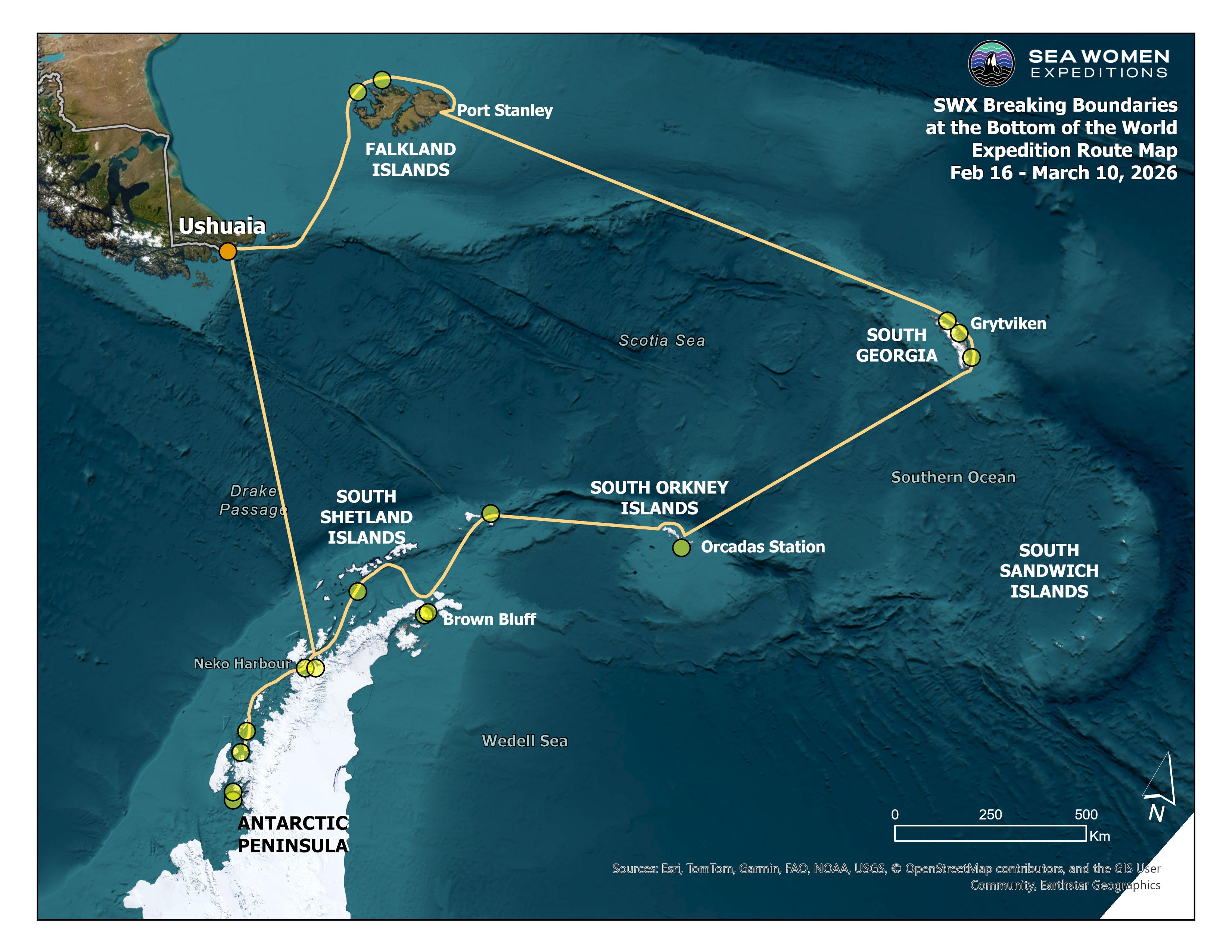
The Sea Women Expeditions team set sail from Ushuaia, Argentina and is expected to reach the legendary Drake Passage on International Women's Day (March 8), celebrating exploration and leadership at sea. View the Expedition Route Map online
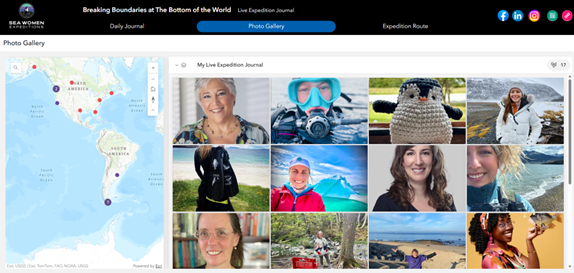
The expedition team is composed of Indigenous and non-Indigenous women and gender diverse leaders in science, exploration, education and storytelling. Meet the explorers