Friction to Feasibility: How Ratio.City Can Unlock Missing Middle Housing
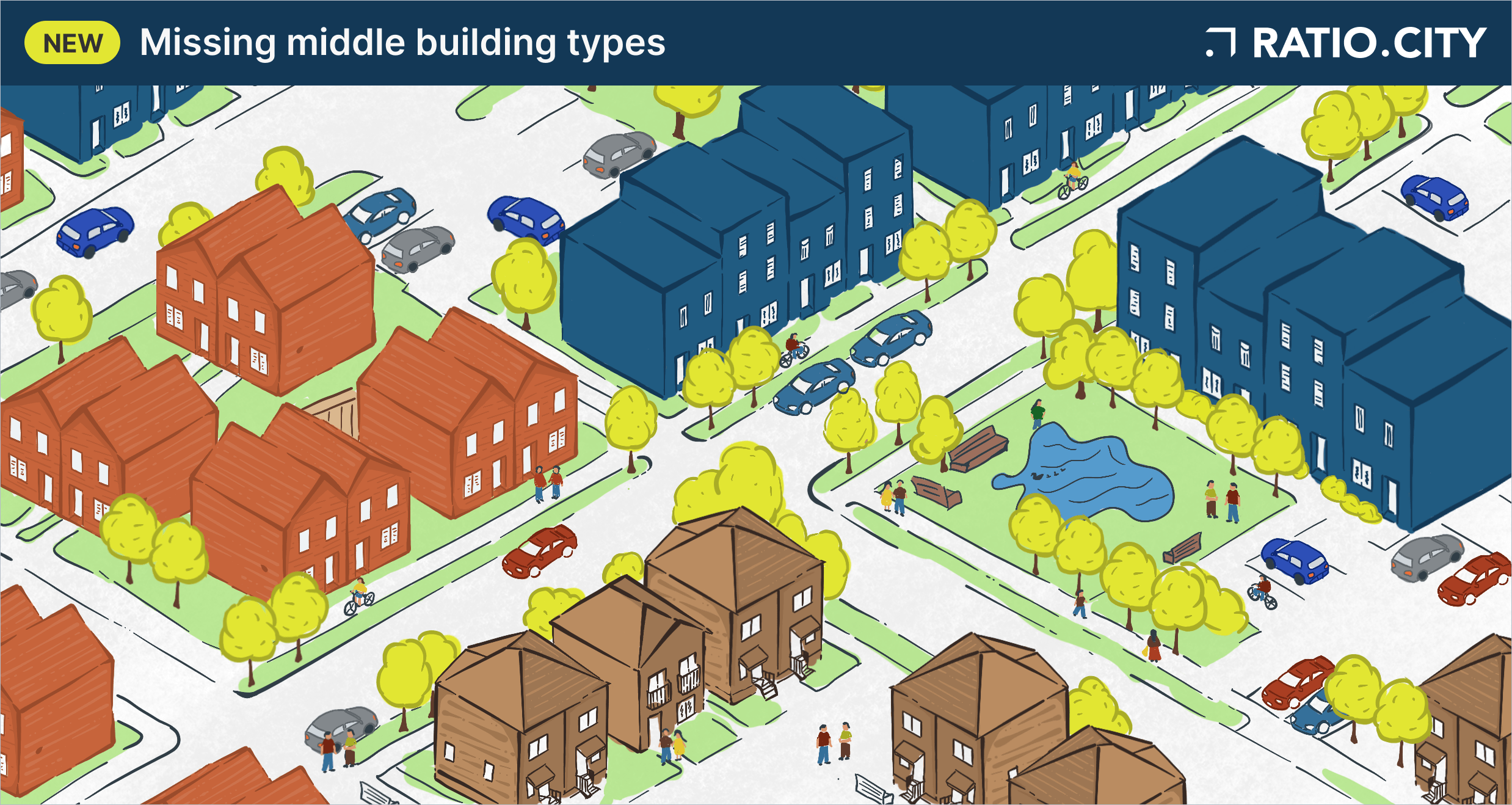
User research is a key tool to shaping features and updates we release at Ratio.City. Engaging with professionals is incredibly important to understanding needs, pain points, and building useful products. Most recently, we have been discussing missing middle development in the city of Toronto. From townhouses to multiplexes — missing middle building types are now live on Ratio.City.
Introduction
The condo boom that defined Canadian urban development for the past two decades is cooling fast. In Q1 2026, there were no new condo construction projects in Toronto, a stark signal that the market is shifting. In its place, another critically important housing type is gaining momentum: missing middle development. Think of multiplexes, townhouses, garden suites, laneway homes - the low-rise buildings that sit between a single-family home and a high-rise tower.
At Ratio.City, we saw the shift, and we responded. We conducted structured user interviews with practitioners across the Greater Toronto Area: planners, architects, developers, and consultants, all navigating the complexity of missing middle development. What they told us was insightful and has directly shaped the missing middle features we've built and are continuing to develop.
The Problem: A Significant Gap in Tools and Expertise
Before diving into what users wanted, it's worth understanding what they're up against. The consultants, tools, and expertise that serve this market are genuinely underdeveloped, and clients coming to consultants with multiplex projects are often less experienced and require more guidance.
Most practitioners are still relying on spreadsheets, PDF bylaws, and manual interpretation to evaluate what can be built on a site, a process that is slow, error-prone, and accessible only to those with deep technical expertise. The result is a widening gap between what policy allows and what gets built and this problem showed clearly in our research.
Practitioners described spending a huge amount of time on tasks that should be quick: checking whether a site is feasible for a given typology, looking for zoning by-law information across inconsistent municipal databases, and re-running the same calculations every time they evaluate a new lot. Users aren't asking for magic; they are asking for speed and confidence at the earliest stages of a project, before they have committed significant resources.
Adoption of missing middle typologies
What Data Practitioners are asking for?
The three most requested missing-middle typologies across our interviews were Accessory Dwelling Units (ADUs), multiplexes, and townhouses, the typologies that municipalities have been trying to unlock. However, having the policy permission to build this and the tools to evaluate and design them efficiently are two very different things.
- When we asked practitioners what they needed, a few consistent themes emerged. One was a fast, reliable site feasibility assessment. Users want to know quickly: does this lot work for this type of building? That means zoning verification, unit count estimates, and as-of-right building envelopes - all in one place, without requiring them to cross-reference different municipal websites.
- The second was trust in the data. Municipal by-laws and zoning information are notoriously inconsistent across jurisdictions. Every city structures its guidelines differently, uses different terminology, and hosts information in different places. Practitioners told us that one of the most confidence-building things a tool can do is surface the zoning by-law reference directly alongside a calculated value - so they're not just trusting a number, they're seeing the direct link to the source where it came from.
- The third was flexibility in the design process itself. Users wanted control to define their setbacks, unit counts, basement configurations, and building dimensions, while also being able to see how those inputs interact with permitted values in real time. The ability to visualize massings alongside statistics: gross floor area, lot coverage and unit counts, is invaluable for high-level feasibility and client presentations. As one participant puts it, an "inputs versus permitted" comparison table is a quick and powerful way to flag potential variances before an application goes anywhere near a planner's desk.
What We Built and What's Coming
In response to the interview findings, Ratio.City launched an initial set of missing middle features focused on the city of Toronto. We have introduced two typologies: multiplex and townhouse. When developing either of these building types, we do the work of reviewing; zoning categories, height limits, lot coverage overlay, EHON-major street parcels, and permitted sixplex areas. Some additional features in the missing middle tools include; a basement toggle, references to the permitted values (lot coverage, height limits, FAR etc.), and a new unit count calculator, designed to make the feasibility checks faster.
Interview feedback has confirmed that we are on the right track, while pointing clearly to what needs to come next. Garden and laneway suites are the most requested additions, a shift towards small-scale, infill housing options that can add density without major redevelopment. Looking further ahead, the roadmap also includes looking into CMHC design guidelines as starting point templates for cities outside of Toronto and adding options for parking in low-rise developments.
Why This Matters Beyond the Product
What our research ultimately confirmed is that the missing middle housing challenge isn't just a policy problem or a financing problem - it's also a tool and information problem. Practitioners who want to build this type of housing are being slowed down at the very first step: understanding what's possible on a site, in a given city, under a given set of rules. By shortening that first step, making feasibility faster, zoning data more accessible, and providing layers easier to visualize, Ratio.City can meaningfully reduce friction in a housing pipeline that needs to move faster.
The missing middle features are now live on the Ratio.City platform. If you want to share your experience or get involved in our research, reach out to us.